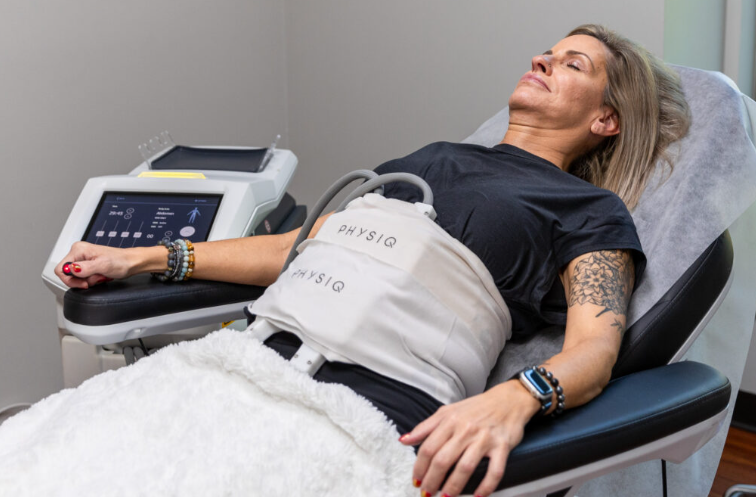
The field of non-invasive body contouring has undergone a major technological evolution over the past two decades. Historically, surgical interventions such as suction-assisted liposuction represented the primary clinical avenue for localized subcutaneous adipose tissue reduction. While surgical methods deliver rapid volume reduction, they inherently carry risks associated with general anesthesia, post-operative tissue trauma, extended recovery windows, and surgical scarring. In response to these limitations, biomedical engineering research focused on developing energy-based technologies capable of targeting subcutaneous fat deposits externally while preserving the structural integrity of overlying dermal layers and adjacent connective tissues.
Among these non-surgical technologies, low-frequency acoustic wave application has emerged as a widely studied method for localized adipose disruption. By utilizing specific sound wave frequencies, practitioners can project focused mechanical energy into the subcutaneous layer. The primary mechanism driving this non-invasive fat reduction process is ultrasonic cavitation, a physical phenomenon wherein rapid pressure oscillations induce micro-bubble formation within interstitial fluid matrices. Understanding the biophysical pathways, cellular responses, and metabolic processing involved in acoustic fat disruption provides valuable insights into how these medical devices achieve localized body sculpting without surgical exposure.
Acoustic Physics: The Mechanics of the 40 kHz Frequency
Sound waves are mechanical vibrations that propagate through biological tissues as longitudinal compression and rarefaction cycles. When applied to biological systems, the depth of penetration and the specific biological response are directly dictated by the frequency, intensity, and focal geometry of the acoustic beam. In non-invasive aesthetic protocols, low-frequency ultrasound operating around 40 kilohertz (40,000 Hz) is widely preferred for subcutaneous adipose targeting.
Higher ultrasound frequencies, such as those operating in the 1 to 3 megahertz range, are heavily absorbed by superficial dermal layers and converted rapidly into thermal energy. This makes high-frequency ultrasound suitable for physical therapy heating or superficial dermal remodeling. Conversely, lower frequencies in the 40 kHz spectrum experience lower attenuation rates in superficial skin layers, allowing the acoustic energy to pass through the epidermis and dermis with minimal energy loss. Upon reaching the hypodermis, where subcutaneous adipocytes reside in a Matrix of collagenous septa and fluid, the low-frequency wave creates intense mechanical pressure differentials.
As the 40 kHz acoustic wave travels through the extracellular fluid surrounding fat cells, it exerts alternating cycles of high pressure (compression) and low pressure (rarefaction). During the rarefaction phase, the local static pressure within the interstitial fluid drops below the vapor pressure of the liquid, causing dissolved gases to expand into microscopic vapor-filled cavities or micro-bubbles. During the subsequent compression phase, these micro-bubbles are compressed. Over multiple high-frequency cycles, the micro-bubbles expand dynamically until they reach an unstable critical size, leading to structural collapse.
Cellular Mechanics: Adipocyte Disruption and Membrane Permeabilization
The mechanical behavior of acoustic micro-bubbles in tissue fluid can be categorized into stable and transient phenomena. Stable micro-bubbles oscillate back and forth around an equilibrium radius over many acoustic cycles, inducing micro-streaming currents in the surrounding fluid. This localized fluid movement exerts shear stress on adjacent cell membranes. Transient micro-bubbles, on the other hand, undergo rapid growth followed by a violent, asymmetric implosion.
When a micro-bubble implodes in close proximity to a cell membrane, it generates a localized shockwave accompanied by high-velocity liquid micro-jets. These mechanical shockwaves deliver concentrated kinetic energy directly onto the fragile phospholipid bilayer of surrounding adipocytes. Because subcutaneous fat cells are relatively large, low-density structures filled with hydrophobic triglyceride droplets, their cell membranes exhibit lower structural resilience against mechanical shear stress compared to neighboring high-density tissues.
Structures such as vascular endothelial cells, peripheral nerve fibers, muscular fascia, and dermal collagen networks possess higher tensile strength and distinct elastic moduli. Consequently, these dense connective tissues absorb acoustic vibrations without undergoing structural collapse, establishing a high degree of tissue selectivity. The implosion shockwaves selectively disrupt the cell membranes of targeted adipocytes, creating microscopic pores or complete structural ruptures. This process releases stored intracellular contents, primarily neutral triglycerides, into the extracellular interstitial space.
Metabolic Processing: Lymphatic Transport and Hepatic Clearance
Once the structural integrity of the adipocyte membrane is compromised and stored lipid compounds are evacuated into the interstitial space, the body must metabolize and eliminate these cellular bypass products. Unlike surgical liposuction, which mechanically vacuums fat tissue out of the body immediately during the procedure, acoustic energy treatments rely entirely on physiological metabolic pathways to clear emulsified fat.
The released intracellular contents consist mainly of hydrophobic triglycerides, free fatty acids, glycerol, and cellular debris. Endogenous lipase enzymes present in the extracellular matrix break down insoluble triglycerides into water-soluble glycerol molecules and free fatty acids. Glycerol, being highly soluble in aqueous environments, diffuses easily into the interstitial fluid and is absorbed directly into the systemic blood circulation. From there, glycerol is transported to the liver and other metabolically active tissues, where it is utilized as an energy substrate or converted into glucose through gluconeogenesis.
Free fatty acids and larger insoluble lipid fragments cannot enter blood capillaries directly. Instead, they are taken up by the lymphatic capillary network. The lymphatic system acts as a specialized transport pathway for macro-molecules and emulsified lipids, conveying them through regional lymph nodes toward the thoracic duct, where they eventually enter the venous bloodstream. Once circulating in the blood, free fatty acids bind to serum albumin and are transported to the liver. The liver processes these fatty acids through normal lipid metabolic routes, converting them into lipoproteins or breaking them down via beta-oxidation to generate adenosine triphosphate (ATP) energy. Any unneeded metabolic waste is excreted through the biliary system and gastrointestinal tract.
Because hepatic processing of released lipids mimics the natural metabolic clearance of dietary fats, post-treatment physical activity and proper systemic hydration are critical operational factors. Aerobic exercise immediately following treatment increases peripheral tissue energy demands, prompting skeletal muscle tissue to oxidize circulating free fatty acids for energy rather than allowing them to be re-stored in remaining intact adipocytes. Adequate water intake enhances lymphatic fluid movement and renal clearance, preventing lymphatic congestion and expediting the removal of metabolic byproduct residues.
See also: Houston Truck Accidents: What Injury Victims Should Expect Legally
Synergistic Modalities: Combining Ultrasound with Thermal and Vacuum Energies
While low-frequency acoustic disruption effectively targets subcutaneous fat volume, comprehensive body contouring often requires addressing secondary aesthetic concerns, such as dermal laxity, localized fluid retention, and irregular skin texture. Modern aesthetic platforms frequently integrate multi-modal technologies into unified treatment protocols to achieve enhanced clinical outcomes.
Radio frequency energy is the most common thermal modality paired with acoustic treatments. While 40 kHz acoustic waves generate mechanical disruption, multipolar radio frequency delivers controlled electrical current through dermal and sub-dermal tissues, generating targeted thermal resistance. Heating the deep dermis to approximately 40 to 42 degrees Celsius causes immediate thermal contraction of triple-helix collagen fibers, stimulating fibroblast proliferation and upregulating long-term neo-collagenesis. This dermal tightening effect counteracts potential tissue sagging that might occur after localized subcutaneous fat volume reduction.
Negative pressure vacuum therapy and mechanical roller massage are also integrated alongside acoustic treatments to optimize fluid kinetics. Applying localized vacuum suction to the skin lifts the target tissue closer to the energy emitter, ensuring consistent acoustic contact and uniform depth of penetration. Furthermore, mechanical vacuum massage stimulates local blood micro-circulation and accelerates lymphatic drainage. By physically propelling extracellular fluid and liquefied lipids toward regional lymph nodes, vacuum therapy reduces post-treatment edema, accelerates metabolic waste removal, and smoothes fibrous septa bands to improve the appearance of surface cellulite.
Clinical Considerations, Safety Protocols, and Patient Selection
Evaluating candidate suitability and maintaining strict operational protocols are vital to ensuring safe, effective non-invasive body contouring treatments. Low-frequency acoustic fat reduction is engineered primarily for localized adipose reduction in individuals near their ideal body weight rather than as a generalized medical solution for systemic obesity. Clinical candidates typically present with focal fat deposits on the abdomen, flanks, thighs, upper arms, or submental regions that demonstrate resistance to diet and exercise regimens.
Appropriate clinical screening must account for underlying physiological conditions that could impair lipid metabolism or lymphatic drainage. Because released fatty acids are cleared through the liver and lymphatic systems, individuals with compromised hepatic function, severe hyperlipidemia, chronic kidney disease, or active lymphatic disorders are unsuitable candidates. Additionally, treatments should not be performed over areas with metal implants, abdominal hernias, active skin infections, or during pregnancy.
Proper operator technique involves applying a dense, conductive ultrasound coupling gel to eliminate air gaps between the transducer head and the skin, preventing superficial acoustic reflection or energy concentration on the epidermal surface. Moving the applicator in continuous circular or linear patterns prevents localized hot spots and ensures an even distribution of acoustic energy across the targeted treatment area. By pairing accurate biophysical understanding with rigorous clinical protocols, practitioners can deliver safe, predictable, and effective body contouring outcomes that harmonize advanced physics with natural human physiology.