Non-Alcoholic Fatty Liver Disease (NAFLD) is incredibly common, often developing quietly alongside weight gain, insulin resistance, and an accumulation of visceral “belly” fat. In its early stages, a fatty liver rarely causes noticeable discomfort. However, as the condition progresses and liver function declines, your body will often send warning signs to the surface.
If you are noticing unusual dermatological changes and are researching fatty liver symptoms on skin, it is essential to understand what these signs mean and when to seek medical evaluation.
Based on clinical insights for Cured Pharmacy, this guide breaks down the connection between metabolic health, liver function, and your skin.
Why Does Liver Disease Affect the Skin?
Your liver is your body’s primary filtration and metabolic engine. It is responsible for clearing out toxins, processing bilirubin (a byproduct of broken-down red blood cells), producing blood-clotting proteins, and regulating various hormones.https://curedpharmacy.com/pages/belly-fatty-liver-symptoms-on-skin
When excess fat accumulates in the liver cells, it triggers inflammation and scarring (fibrosis). As the liver’s ability to perform its essential jobs slows down, toxins and byproducts build up in the bloodstream. Because the skin is the body’s largest organ, this internal toxic burden frequently manifests externally.
Key Fatty Liver Symptoms on Skin
If your liver is struggling, the dermatological symptoms can range from subtle discoloration to severe itching. Here are the primary skin manifestations associated with fatty liver disease and liver dysfunction:
1. Acanthosis Nigricans (Dark, Velvety Patches)
This is one of the most common early skin signs associated with the “belly fat” and fatty liver connection. Acanthosis nigricans appears as dark, thick, velvety patches of skin, typically found in body folds and creases such as the neck, armpits, or groin.
- The Cause: It is a direct physical marker of severe insulin resistance, which is a primary driver of NAFLD. When your body cannot use insulin properly, excess insulin builds up in the blood, triggering skin cells to reproduce rapidly and hyper-pigment.
2. Jaundice (Yellowing of the Skin and Eyes)
Jaundice is the classic hallmark of advanced liver disease. It causes the skin and the whites of the eyes to take on a distinctly yellow tint.
- The Cause: When a fatty liver becomes severely inflamed or scarred (cirrhosis), it loses its ability to process bilirubin. The bilirubin then builds up in the bloodstream and deposits into the skin and eye tissues.
3. Spider Angiomas (Spider Veins)
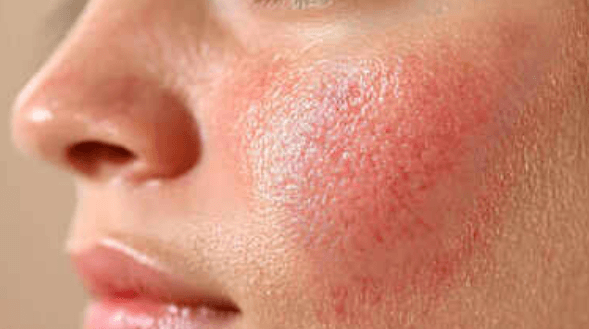
These are abnormal collections of blood vessels near the surface of the skin. They feature a central red spot with reddish extensions radiating outward, resembling a spider’s web. They frequently appear on the face, neck, upper chest, and arms.
- The Cause: A struggling liver cannot adequately metabolize circulating estrogen. The resulting spike in estrogen levels causes these small blood vessels to dilate and become visible.
4. Pruritus (Severe, Unexplained Itching)
Liver-related itching can be localized (often on the palms of the hands and soles of the feet) or generalized across the whole body. Unlike a normal rash, pruritus caused by liver disease often does not feature visible bumps or redness until you have scratched the skin raw. It tends to be worse late at night.
- The Cause: While the exact mechanism is still being studied, it is heavily linked to the buildup of bile salts in the bloodstream that deposit into the skin.
5. Palmar Erythema (Red Palms)
This condition causes the lower palms of the hands to become significantly red, warm, and sometimes throbbing. The redness typically blanches (turns white) when you press on it.
- The Cause: Similar to spider angiomas, palmar erythema is driven by altered hormone metabolism and changes in peripheral blood circulation.
Summary of Symptoms and Causes
| Skin Symptom | Visual Appearance | Underlying Liver/Metabolic Cause |
| Acanthosis Nigricans | Dark, velvety patches on the neck/armpits | Severe insulin resistance |
| Jaundice | Yellowing of skin and eye whites | Bilirubin buildup |
| Spider Angiomas | Red, spider-like veins on chest/face | Elevated estrogen levels |
| Pruritus | Intense itching without a rash | Bile salt accumulation |
| Palmar Erythema | Warm, reddened palms | Altered hormone circulation |
The Belly Fat Connection
There is a direct clinical correlation between abdominal weight and liver health. Visceral fat (the hard belly fat stored deep within the abdominal cavity around your organs) is biologically active. It constantly releases inflammatory cytokines and free fatty acids directly into the portal vein, which feeds straight into the liver.
This constant influx of fat and inflammation is what triggers NAFLD. Therefore, addressing belly fat through metabolic interventions is the most effective way to halt and reverse early-stage fatty liver disease.
What Should You Do Next?
The good news is that the liver is incredibly resilient. In its early and moderate stages, a fatty liver can actually heal and regenerate itself.
- Seek Medical Diagnosis: Do not attempt to self-diagnose based on skin changes. If you recognize these fatty liver symptoms on skin, book an appointment with your GP. They will likely order a liver function blood test (LFT) and an ultrasound to assess the physical state of your liver.
- Address Insulin Resistance: Because NAFLD is a metabolic condition, dietary changes are the first-line treatment. Reducing refined carbohydrates, eliminating sugary drinks, and increasing fiber intake can drastically improve insulin sensitivity.
- Sustainable Weight Loss: Clinical guidelines suggest that losing just 7% to 10% of your total body weight can significantly reduce liver fat, ease inflammation, and resolve many of these dermatological symptoms.
Skin changes are your body’s way of asking for help. By recognizing the signs early, you can take proactive steps to restore your metabolic health and protect your liver.