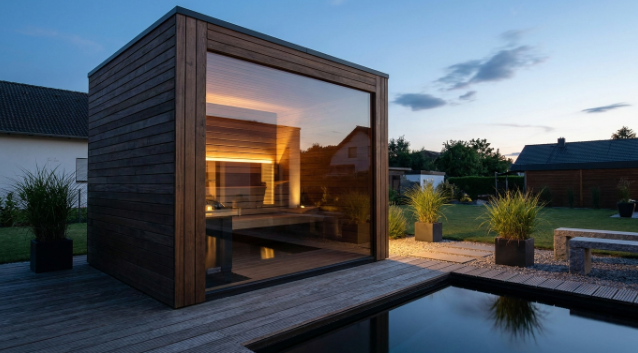
A traditional electric-heater cube sauna heats the air to 150 to 195 degrees Fahrenheit using stones, delivers optional steam, and typically needs a dedicated 240V circuit; an infrared cube sauna uses carbon or ceramic panels to warm the body more directly at a lower 120 to 150 degree range, often plugs into a standard 120V outlet, and preheats faster. Neither is universally better. Here is how the two compare across the seven factors that actually decide which one fits a given backyard and budget.
1. How the Heat Is Generated
A traditional cube sauna heats the air around you using an electric heater topped with volcanic stones, the same basic mechanism Finnish saunas have used for generations. An infrared cube sauna instead uses carbon-fiber or ceramic panels mounted in the walls that emit infrared radiation, warming the body’s surface more directly than the surrounding air. The physical sensation is genuinely different: traditional heat feels like a hot, dry room; infrared feels more like standing near a heat lamp while the air around you stays comparatively cool.
2. Peak Temperature and Preheat Time
Traditional units commonly run 150 to 195 degrees Fahrenheit and take 20 to 40 minutes to preheat, depending on heater size and insulation quality. Infrared units generally top out lower, around 120 to 150 degrees, but reach a usable temperature much faster, often in 10 to 15 minutes, since infrared panels do not need to heat a large mass of stone or the full volume of air in the cabin.
3. Electrical Requirements
This is one of the biggest practical differences. A traditional heater above roughly 4.5 kW needs a dedicated 240V circuit, which usually means an electrician, a permit, and a wait for the wiring to be inspected. Infrared panels typically draw 1.5 to 2.5 kW total and often run on a standard 120V 20-amp household outlet, which is a meaningful advantage for anyone who wants to install without an electrical upgrade.
4. Steam and Humidity
A traditional heater with stones lets you pour water (löyly, in Finnish sauna tradition) for a burst of steam and humidity, which many long-time sauna users consider central to the experience. Infrared panels have no stones and produce no meaningful steam, so if humidity and the hiss of water on hot rock is part of what you are after, only a traditional heater delivers it.
5. Ongoing Electricity Cost
Lower wattage generally means lower running cost. Infrared panels drawing under 2.5 kW cost noticeably less per session than a 6 kW or larger traditional heater, though the gap in real dollars per session is modest for most households, usually a difference of a few cents to a bit more per use depending on local electricity rates and session length.
6. Cabin Construction and Wall Space
A traditional cube sauna needs open wall space for the heater cabinet and stone bed, plus clearance around it. An infrared cube sauna mounts panels flush against the interior walls, which frees up a bit of floor space and simplifies bench layout in a smaller footprint like a 4×4 or 4×5 cube, where every square foot of usable interior counts.
7. Price and Where to Compare
Traditional cube saunas with a quality stone heater generally sit at a higher price point than a comparably sized infrared model, though both spans overlap heavily depending on wood grade and build quality. Prices and heater specs vary enough between sellers that it is worth comparing at least two or three listings side by side. Sweat Decks lists both traditional and infrared cube sauna options in its lineup, which makes it a reasonable single stop for a side-by-side price and spec comparison before deciding.
8. Maintenance
A traditional heater needs its stones checked periodically and swapped out every one to two years as they crack from repeated heat and water cycling, plus a bit more attention to the vents and rock bed than an infrared unit requires. Infrared panels have no stones to replace and no water contact to manage, so maintenance mostly comes down to keeping the panel surfaces dust-free and checking the wiring connections occasionally. Wood care for the cabin itself, wipe-downs, monthly cleaning, watching the sill for moisture, is essentially identical between the two, since that maintenance is about the wood, not the heat source.
9. Who Each Type Actually Suits
A traditional cube sauna suits someone who wants the classic high-heat, steam-capable experience and has the electrical capacity, budget, and patience for a longer preheat, along with anyone drawn specifically to löyly and the ritual that comes with it. An infrared cube sauna suits someone working with a smaller electrical panel, a tighter budget, or a preference for a gentler, more direct-heat session that is ready to use in a fraction of the time. Neither answer is more legitimate than the other; the honest answer is that the two deliver different experiences built around different constraints, and the right one is whichever set of tradeoffs matches your yard, panel, and personal preference.
What Does the Evidence Say About Either Type?
Most of the published research on health associations, including reviews in Mayo Clinic Proceedings and a systematic review in Evidence-Based Complementary and Alternative Medicine, comes from studies of traditional Finnish-style sauna bathing rather than infrared use specifically, and the American Journal of Medicine’s overview of sauna benefits and risks likewise centers on conventional heat exposure. Infrared saunas are newer and have a thinner independent research base by comparison, though the general physiological pattern (elevated heart rate, vasodilation, mild cardiovascular stress response) is broadly similar at lower peak temperatures. Anyone leaning on the research specifically, rather than just personal preference, should weight that toward traditional over infrared, at least until infrared-specific research catches up.
Frequently Asked Questions
Is infrared or traditional better for a first-time cube sauna owner?
Traditional electric-heater cube saunas are generally the more familiar experience and reach higher temperatures faster, while infrared cube saunas run cooler and often plug into a standard outlet, which makes them easier to install for a first-time buyer without an electrician.
Does a traditional cube sauna heat up faster than an infrared one?
Yes. A traditional electric heater with stones typically preheats in 20 to 40 minutes to reach 150 to 195 degrees Fahrenheit, while infrared panels usually reach a comfortable operating temperature in about 10 to 15 minutes, though at a lower peak temperature, generally 120 to 150 degrees.
Can I add steam or humidity to an infrared cube sauna?
No, not meaningfully. Infrared panels do not heat rocks, so there is nothing to pour water over for steam. A traditional heater with stones is the option if löyly-style steam is part of what you want from the sauna.
Which type uses less electricity, traditional or infrared?
Infrared cube saunas generally draw less power overall, since panels typically run in the 1.5 to 2.5 kW range on standard 120V, compared to traditional heaters that often need 6 kW or more on a dedicated 240V circuit.
References
- Cardiovascular and Other Health Benefits of Sauna Bathing: A Review of the Evidence, Mayo Clinic Proceedings, 2018
- Clinical Effects of Regular Dry Sauna Bathing: A Systematic Review, Evidence-Based Complementary and Alternative Medicine, 2018
- Benefits and risks of sauna bathing, The American Journal of Medicine, 2001
By Emily Sandoval